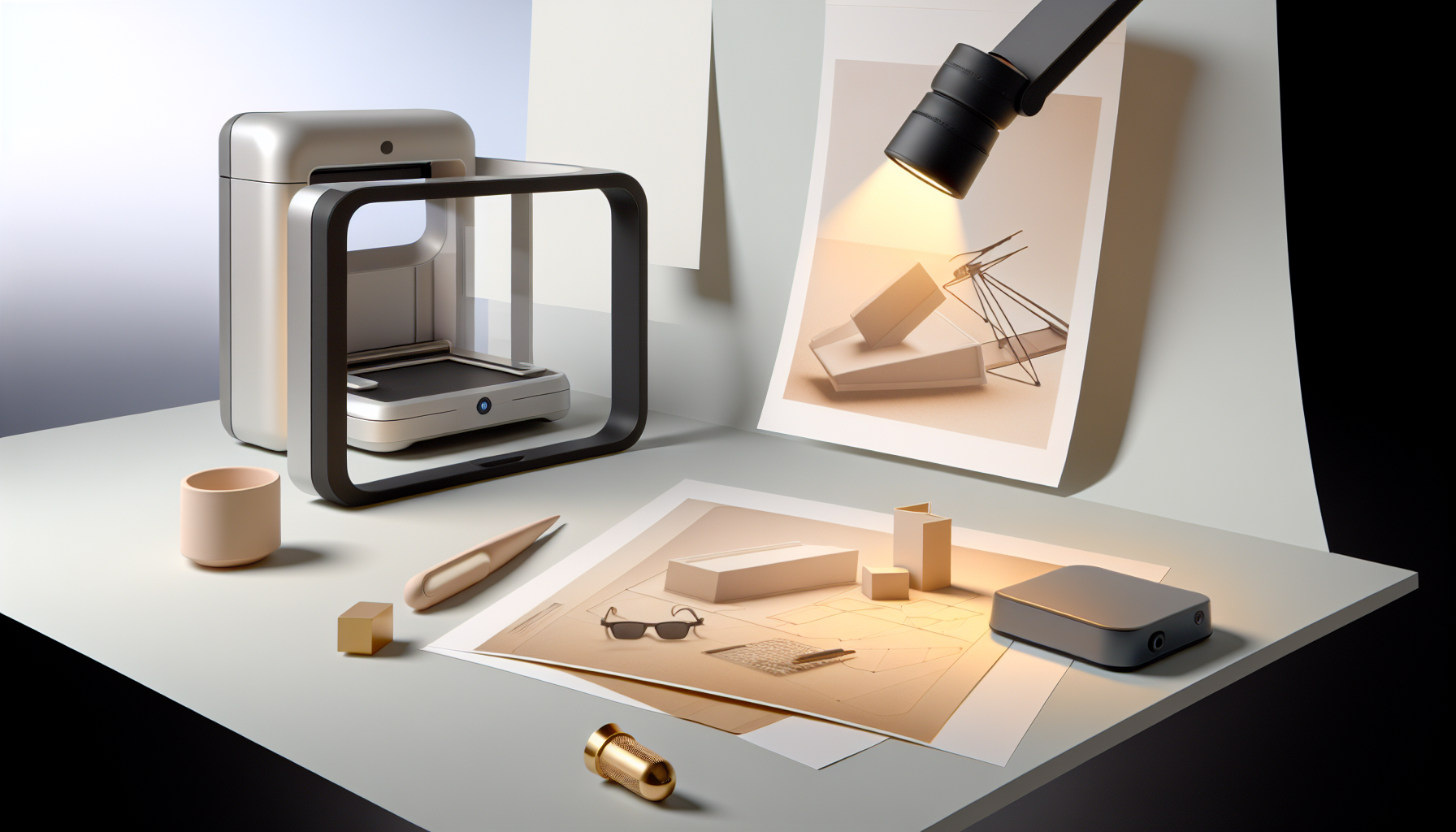
In the world of technological advancement, 3D scanning has emerged as a transformative tool, offering precise three-dimensional geometry capture of objects. Using advanced technologies such as lasers and structured light, these scanners create digital models crucial for various industries. Whether it's for accurate reverse engineering, rapid prototyping, or iterative design processes, 3D scanning plays an indispensable role. Notably, in product development, it streamlines workflows and significantly reduces errors, thereby accelerating time-to-market by up to 50% through CAD integrations. Throughout this blog, we will explore the depths of 3D scanning, its integration in product development, the facilitation of rapid prototyping, the acceleration of design iterations, and its role as a robust engineering solution.
Delving into 3D Scanning: An Overview
The foundation of understanding 3D scanning lies in the various technologies it encompasses. From portable laser scanners to structured light systems, and handheld devices like the Handyscan 3D, these tools offer an array of applications across industries. The essence of 3D scanning technology is its ability to record real-world dimensions with micron-level accuracy, far surpassing traditional methods such as 2D drawings or calipers.
Types of 3D Scanners and Industry Applications:
- Portable Models: These are widely used in industries like automotive and ergonomics. For instance, capturing the intricacies of vehicle parts or human interface products allows for more precise engineering solutions.
- High-Precision Scanners: Industrial applications benefit significantly from these scanners due to their high accuracy in capturing complex geometries vital for manufacturing parts.
A standout feature of 3D scanning is its capacity to minimize development cycles. By providing verifiable digital models, these technologies ensure components match precisely, supporting intricate prototyping endeavors. Consequently, this enhances rapid prototyping and design iteration, significantly reducing time-to-market.
The Crucial Role of 3D Scanning in Product Development
3D scanning's integration into product workflows is revolutionary. The technology digitizes mockups, existing parts, and prototypes to seamlessly transfer data into CAD software. This not only guides revisions and first-article inspections but also significantly cuts down design time.
Efficiency through 3D Scanning:
- Elimination of Manual Data Collection: By digitizing real-world measurements, 3D scanning eliminates the tedious and error-prone manual data collection process.
- Shared Scan Data: This facilitates collaboration across teams, ensuring that the entire product development team works with accurate models for faster and error-free iterations.
Real-World Examples:
- In the automotive sector, 3D scanning enhances prototyping processes. By capturing component modifications, the technology ensures aftermarket parts fit seamlessly with scanned vehicle geometries, thus avoiding collisions and manufacturing setbacks.
- Design modifications in other industries, like consumer electronics, benefit from the streamlined workflow offered by 3D scanning, leading to faster product deployment.
As industries increasingly adopt 3D scanning, the technology’s impact on efficiency becomes indisputable, driving innovation and improving market readiness.
Rapid Prototyping Enhanced by 3D Scanning
Rapid prototyping pertains to the swift creation of physical models from digital designs, a crucial step for concept testing before full-scale production. Here, 3D scanning plays a pivotal role by transforming physical mockups into editable CAD models, enhancing quick modifications and facilitating 3D printing.
Key Benefits of Rapid Prototyping with 3D Scanning:
- Reduced Time-to-Market: With expedited model creation and testing, products can be launched faster than traditional methods allow.
- Lower Material Costs: Skipping traditional molding processes saves on materials, making prototyping more economical.
- Enhanced Prototype Confidence: Precise digitization results in high-fidelity prototypes, instilling greater confidence in subsequent production stages.
3D scanning thus stands as an enabler of rapid prototyping, enhancing the ability of businesses to test and refine concepts swiftly and effectively.
Design Iteration: Accelerating Progress with 3D Scanning
Design iteration, the practice of refining products through repeated testing and modifications, is central to enhancing product quality and functionality. Traditional design iteration, often slowed by physical rebuilds, benefits immensely from 3D scanning.
How 3D Scanning Enhances Design Iteration:
- Precise Data for CAD Updates: By offering accurate scan data, 3D scanning facilitates quick CAD updates, fostering an efficient feedback loop where physical tests instantly inform digital revisions.
- Real-World Measurements: Ergonomic adjustments become more precise with the capture of real-world measurements, reducing cycles needed for test-fix-retest processes.
Consider ergonomic products like workplace furniture or consumer gadgets. With 3D scanning, these products can be tweaked based on user feedback and re-scanned to ensure comfort and utility before mass production, ensuring each iteration brings the product closer to perfection.
3D Scanning: A Comprehensive Engineering Solution
3D scanning addresses complex engineering challenges, enabling professionals to capture intricate shapes, ensure part fit, and even reverse engineer legacy components without original drawings.
Engineering Challenges and 3D Scanning Solutions:
- Quality Control: Through deviation analysis against design specifications, 3D scanning ensures components meet stringent quality standards.
- Ergonomic Optimization: For human-interface products like prosthetics, scanning provides personalized designs that enhance user comfort and functionality.
- Reverse Engineering: Scanning allows engineers to recreate designs without existing blueprints, invaluable for maintaining or upgrading legacy systems.
Sector-Specific Examples:
- The automotive industry often applies 3D scanning for crafting collision-free aftermarket designs and components that integrate seamlessly with existing models.
- In healthcare, body scans are leveraged to create custom-fitted medical devices, tailored for individual needs, offering superior comfort and performance.
By solving these engineering puzzles, 3D scanning strengthens the toolkit of modern engineers, making it indispensable for precise and innovative solutions.
Future Trends and Innovations in 3D Scanning for Product Development
The future of 3D scanning in product development is bright with emerging trends and innovations poised to revolutionize industries further. Integrating AI, the future promises automated design optimization and the potential for mass customization, often referred to as “batch size one” manufacturing.
Upcoming Innovations and Trends:
- AI Integration: With artificial intelligence, 3D scanning can automate design tasks, providing real-time iterations and optimizations.
- Portable Scanners with Advanced Algorithms: These enable on-site data capture, allowing for immediate feedback and adjustments, streamlining the iteration process.
- Workflow Automation: Tying 3D scanning directly with production accelerates processes, reducing overall development timelines.
The potential for these advancements means that businesses can achieve higher quality outputs, faster productions, and leaner operations, transforming how products are conceived and brought to market.
Conclusion: The Indispensable Role of 3D Scanning in Product Development
Incorporating 3D scanning into product development is more than a luxury — it’s a necessity in today’s competitive markets. The technology delivers astonishing accuracy, faster prototyping, efficient iterations, and solves complex engineering challenges.
Ultimately, whether it's through enhancing rapid prototyping or providing innovative engineering solutions, 3D scanning reshapes traditional workflows into streamlined, cost-effective processes. By embracing 3D scanning, industries can harness its capabilities for faster development cycles and superior quality products, underscoring its essential role in modern product development strategies.
Call to Action
We invite you to share your experiences with 3D scanning below. Engage with resources on portable scanners and CAD integrations to see practical implementations of this transformative technology. Explore further by reading about how Exploring the Impact of 3D Scanning on Educational Tools and Resources revolutionizes educational tools or Enhancing Remote Prototyping with 3D Scanning in the Fashion Industry enhances remote prototyping in the fashion industry.
FAQ
1. What industries benefit most from 3D scanning?
3D scanning is broadly beneficial, but industries like automotive, aerospace, healthcare, and consumer electronics derive significant value. These sectors leverage scanning technologies for precision modeling, prototyping, and quality assurance, critical for their intricate and precise manufacturing requirements.
2. How does 3D scanning influence cost savings in product development?
By reducing manual data collection, accelerating prototyping, and minimizing design errors, 3D scanning significantly cuts costs. It eliminates the need for physical prototypes and molds, reducing material waste, and shortens product lead times, yielding significant savings over traditional methods.
3. Can 3D scanning technology be applied to small businesses?
Yes, 3D scanning is accessible and beneficial to small businesses. By adopting portable scanners, small enterprises can innovate more rapidly, enhance product quality, and reduce development costs, allowing them to compete more effectively in diverse markets.
4. Are there any limitations to using 3D scanning in product development?
While highly beneficial, 3D scanning can be limited by factors such as initial cost, the complexity of the object's surface (e.g., reflective or transparent materials), and the need for skilled personnel to operate and interpret scan data effectively.
5. What future advancements might enhance 3D scanning’s capabilities?
Future advancements include AI-driven design automation, improved scanner portability, greater scanning speed and precision, and enhanced integration with other technologies like augmented reality (AR) for more immersive design and testing experiences.