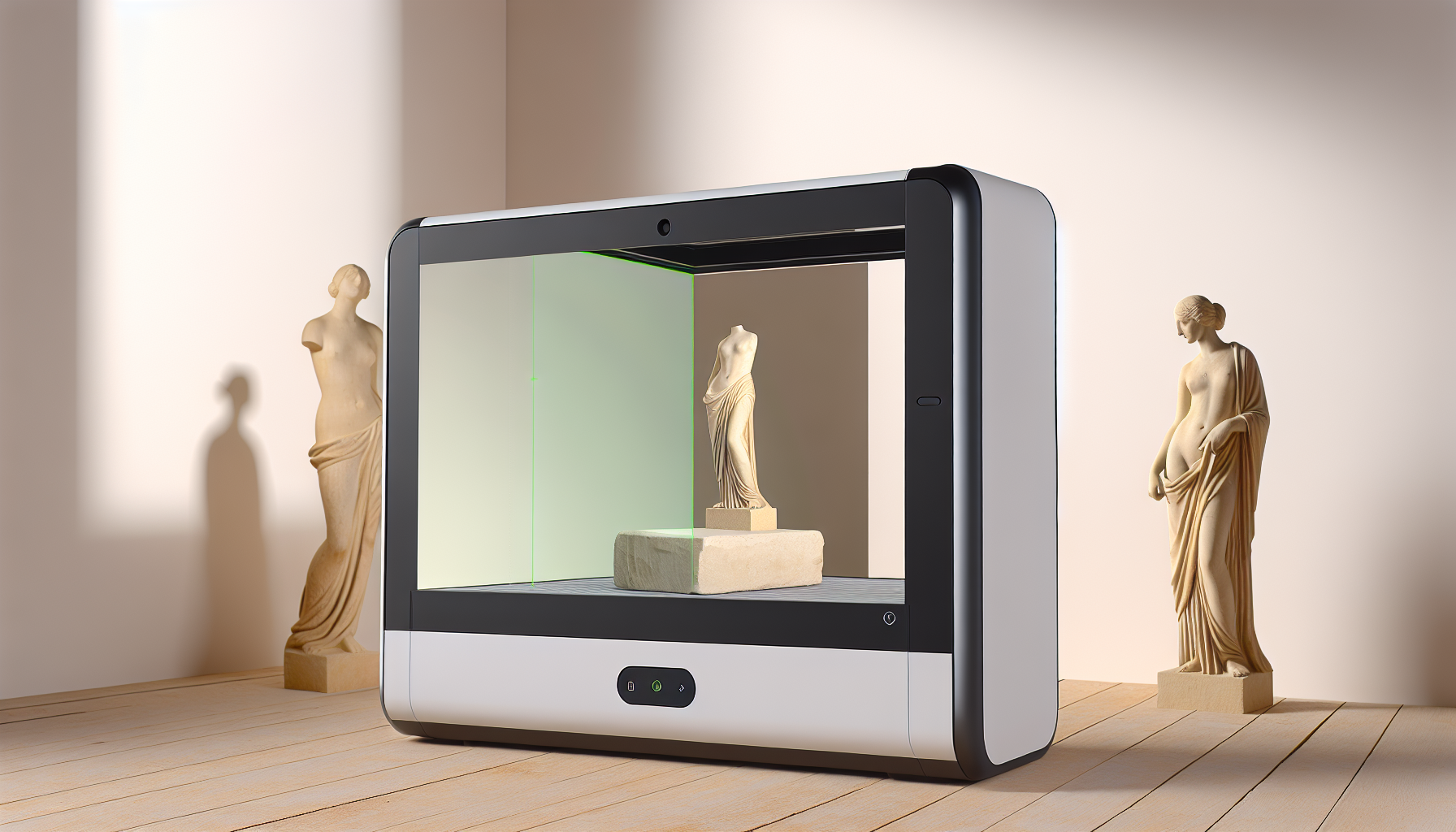
3D scanning is a transformative technology revolutionizing modern art practices by bridging traditional craftsmanship with digital innovation. By capturing physical objects using techniques like structured light and photogrammetry, artists can create precise digital models that facilitate replication, preservation, and immersive experiences. In today's art world, 3D scanning enhances the creative process, allowing artists to push boundaries and explore new forms of expression. Its significance lies in enabling the meticulous digitization of sculptures, installations, and performances, providing a medium for preserving cultural heritage while crafting innovative experiences that captivate audiences.
Understanding 3D Scanning in Art
3D scanning in art involves the process of capturing the dimensions and surface details of physical objects to create detailed digital replicas. This advanced technology uses methods such as photogrammetry and structured light scanning. Photogrammetry involves taking multiple photographs of an object from different angles and using software to convert these images into a 3D model. In contrast, structured light scanning projects a pattern onto the surface of an object, capturing the way it deforms to measure shape and dimension accurately.
Initially, 3D scanning started as a tool for basic digitization in the art world. Artists and researchers used it to preserve artifacts by creating digital backups. Today, this technology has evolved to offer much more, including the use of sophisticated handheld scanners like the 3DMakerpro Moose, which enables on-site capturing of sculptures and intricate environments. This evolution marked a significant shift, from merely preserving art pieces digitally to creating and fabricating entirely new artworks and installations. With the increased accessibility and portability of these devices, artists now have the power to explore artistic boundaries right at their fingertips, turning their visions into reality while ensuring their work's longevity for future generations.
Applications of 3D Scanning in Art Installations
One of the most exciting applications of 3D scanning in art installations is its ability to digitize real-world elements for creating new, immersive experiences. Artists are transforming spaces into holistic sensory experiences by integrating digitized objects into interactive layouts. This is notably seen in environments like virtual reality (VR) sculptures and interactive gallery pieces that respond dynamically to visitors' movements.
The Cleveland Museum of Art exemplifies this innovative approach through its ArtLens Gallery. Here, 3D scanning technology has enabled the creation of rotatable 3D models, which form the basis of interactive, gesture-based games. By using photogrammetry, artists and curators have crafted digital replicas of art pieces, allowing for deeper visitor engagement as gallery-goers interact with art in unprecedented ways. Furthermore, the use of scanned elements in projection mapping has further expanded possibilities. For instance, by mapping scans of Kandinsky-inspired works onto surfaces, artists create projections that change and react in real-time, offering a unique, ever-evolving art experience.
This transformative process not only brings art to life but also enhances accessibility, as digital archives allow anyone from around the world to engage with art in innovative formats. 3D scanning thereby expands the venue of art beyond traditional walls, inviting a shared experience that is redefining participation and interaction in cultural spaces.
Sculpture Replication through 3D Scanning
Sculpture replication using 3D scanning is yet another profound innovation reshaping the art world. Artists harness technologies like laser scanning and photogrammetry to capture high-fidelity models of sculptures. Once scanned, these models can be meticulously scaled, modified, and eventually 3D printed to produce precise replicas, often saved as STL files for specific printers.
This process offers significant advantages over conventional replication methods, which typically involve making molds and casts. Compared to these traditional techniques, 3D scanning provides unmatched precision, reducing the risk of damaging delicate artworks because it significantly minimizes the need for physical contact. Moreover, it dramatically reduces material waste, as artists can quickly iterate on designs without the repetitive labor of manual reshaping.
Furthermore, the integration of 3D printing with 3D scanning enables the realization of complex designs that were previously impossible or impractical to achieve. This efficiency not only accelerates the artistic process but also fosters new creative potential, making it easier for artists to experiment with and refine concepts. Sculptors can quickly produce variations of their work, enhancing both the creative and educational aspects of art.
Integration with Digital Art
The way 3D scanning complements digital art highlights its myriad possibilities for creative fusion. By converting real-world objects into detailed 3D assets, this technology breathes new life into the realm of digital art, particularly through applications in virtual reality (VR) and augmented reality (AR). Artists can animate these scans, place them within digital exhibitions, or use them in performance art to create entirely new expressions.
A striking example includes using 3D scanning for creating performance art prosthetics. Here, body models are scanned and turned into digital assets that performers can integrate with in real-time for enhanced visual storytelling. The technology is also used to craft wearable fashion accessories that blur the line between art and practical design, giving rise to bold, avant-garde expressions. Furthermore, motion capture technology combined with scanned digital assets enables artists to choreograph intricate digital dances, integrating these performances into real-time projections to craft immersive experiences. These possibilities offer artists a revolutionary playground for innovation, where the digital realm intersects with the tangible, blending both to expand the boundaries of imaginative art and storytelling capabilities.
Impact on Creative Design
The impact of 3D scanning on creative design is profound, liberating artists from material constraints and opening doors to boundless experimentation. By digitizing objects, artists can edit, manipulate, and transform them in digital form, exploring intricate details and textures without needing to produce physical prototypes constantly. This flexibility encourages innovation, allowing artists to test multiple iterations and effects seamlessly.
3D scanning helps designers generate innumerable variations of their models, enabling them to create complex, hybrid designs that combine digital and physical elements in innovative ways. This creative freedom has reshaped how artists approach form and scale, facilitating the exploration of concepts that were previously limited by physical resources or material costs. Additionally, small-scale 3D scanning has enabled artists to replicate found objects or hand-sculpted models, enhancing their artistry by integrating personal touches or thematic elements into larger works.
In some cases, designers have even used 3D scanning to reinterpret historical artworks, adding modern digital layers to classical forms. These layers can represent new narratives or commentaries, pushing boundaries on how art can express complex cultural dialogues. By augmenting traditional crafts with high-tech tools, artists foster an environment ripe for creative exploration, ultimately transforming how art is both experienced and conceptualized.
Case Studies and Examples
Numerous case studies across the art world highlight the transformative impact of 3D scanning. The Cleveland Museum of Art leads with its innovative use of photogrammetry to enhance its ArtLens exhibits. The museum's projects involve creating high-resolution 3D models of reflective and complex objects, paving the way for digital interaction and exploration. These efforts help pave the way for new types of museum experiences that are both educational and engaging.
Another inspiring example involves the use of 3DMakerpro scanners in mixed-media installations. These scanners have been instrumental in crafting VR sculptures and projection-mapped gallery spaces, easily blending physical and digital elements. Such projects invite viewers to step into a realm of art that exists beyond the traditional, enriching engagement by leveraging the tactile allure of interactive installations.
Moreover, 3D scanning plays a critical role in museum preservation efforts. By digitizing artifacts with high-resolution scans, curators ensure the long-term availability of cultural heritage, creating digital records that can withstand the test of time. This is more than just a technical achievement; it represents a philosophy shift towards using technology to safeguard artistic legacies. At the same time, artists and institutions can analyze these digital replicas to inform restoration efforts, maintaining historical pieces' authenticity for years to come.
Sculpture digitization, using handheld scanners, has also enabled artists to capture and replicate ceramics and architectural elements for displacement and study in galleries, enriching exhibitions with historic and contemporary exchanges. These developments illustrate how integral 3D scanning technologies have become, offering invaluable tools for artists and institutions in an increasingly digital landscape.
Challenges and Limitations
Despite its transformative potential, 3D scanning in the art sector is not without challenges and limitations. The integration of scanning technologies comes with steep learning curves, especially when artists are presented with the task of capturing complex or reflective surfaces, which can challenge even advanced photogrammetry systems. Handling these surfaces effectively requires a good grasp of both the art and science involved in scanning.
Technological limitations are also present. Ethical debates arise regarding the replication of original masterpieces, as 3D scanning blurs the boundaries between authentic artworks and their digital copies. Ensuring these technologies are user-friendly enough not to disrupt creative processes remains a concern for many artists. Moreover, as seen in Enhancing Remote Prototyping with 3D Scanning in the Fashion Industry, these scanners allow for precise digital fashion prototyping, illustrating the crossover potential of 3D technologies beyond traditional art spaces.
Another significant challenge is the requirement for expertise in high-fidelity scanning processes, which can be resource-intensive. For this reason, many artists must rely on collaborations with technical specialists or invest significantly in learning how to operate these detailed systems. Moreover, the equipment necessary for on-site scanning must be both portable and precise, essential for capturing detailed models while maintaining the flexibility needed for artistic exploration.
Therefore, while 3D scanning holds immense potential, its adoption demands careful consideration of these challenges. Artists and institutions need to weigh the benefits of these technologies against the complexities they introduce, ensuring that they enrich rather than impede the creative process.
The Future of 3D Scanning in Art
As the field of 3D scanning continues to develop, the art world stands poised for profound transformations. Advancements in technology are making scanners more accessible and integrated with extended reality (XR) environments. As such, artists are now exploring broader use scenarios in real-time interactive art, personalized digital twins, and even virtual museums.
The future of 3D scanning will likely see digital and physical spaces merging more seamlessly, allowing individuals worldwide to access and engage with art in real-time from any location. This democratization of access not only highlights the potential for global outreach but also raises important discussions about authenticity and ownership, especially as 3D replicas become more prevalent.
As more artists are beginning to appreciate the potential of 3D scanning, it has become a significant tool in opening up educational opportunities, as demonstrated in articles like Revolutionizing Education: The Impact of 3D Scanning in STEM Learning and Exploring the Impact of 3D Scanning on Educational Tools and Resources, which show its reach beyond art into broader educational contexts.
Looking ahead, artists may use more sophisticated 3D scanning technologies to craft highly personalized artistic experiences while pushing the boundaries of meaning and representation in art. As tools continue to become more intuitive, they will transform not just how art is made but how it's perceived, challenging traditional notions and inviting fresh perspectives.
In this evolving landscape, 3D scanning stands as a bridge between heritage and innovation, providing the tools necessary to preserve the past while simultaneously opening doors to unexplored future possibilities. This ongoing technological evolution encourages a deeper, more integrated relationship between art and digital technologies, all while expanding horizons for creative expression.
Conclusion
In conclusion, 3D scanning in art signifies a pivotal transformation in how art is created, preserved, and experienced. Through precise digitization, artists can deliver immersive applications and innovative replications, enabling new creative expressions while ensuring the longevity of cultural heritage. Museums and artists worldwide are embracing this technology, crafting engaging projects that enhance both educational and aesthetic interventions.
3D scanning's innovations in precision, flexibility, and creativity open promising avenues for artistic exploration, as evidenced by museum projects and interactive installations that captivate audiences and honor historical legacies. Encouraging broader adoption of 3D scanning in artistic creation offers artists and institutions unprecedented opportunities to collaborate, innovate, and expand. As these digital-integration practices continue to advance, they will unlock new, boundary-pushing experiences, encouraging us to rethink what art can achieve in our interconnected world.
FAQ
1. What is the role of 3D scanning in preserving cultural heritage?
3D scanning plays a crucial role in preserving cultural heritage by creating high-fidelity digital replicas of artifacts and artworks. These digital models safeguard historical objects by allowing them to be stored electronically, reducing the risk of damage or loss due to physical handling. Additionally, digital replicas can be easily accessed and studied by scholars and the public, encouraging broader engagement and deeper understanding.
2. How does 3D scanning enhance interactive art installations?
In interactive art installations, 3D scanning enables artists to incorporate real-world elements into digital frameworks, creating immersive environments that respond dynamically to viewer interactions. By digitizing objects and mapping them into virtual spaces, artists craft experiences that engage multiple senses, inviting visitors to participate actively with the art through movements, gestures, or even sounds.
3. Are there limitations to replicating complex surfaces with 3D scanning?
Yes, replicating complex surfaces can present challenges for 3D scanning. Reflective, transparent, or intricately detailed surfaces can result in scanning inaccuracies, requiring advanced technologies and expertise to capture correctly. Artists and technicians must often experiment with different scanning methods to achieve the high-fidelity results needed for precise replication.
4. What future advancements could impact the use of 3D scanning in art?
Future advancements in 3D scanning technology could further integrate extended reality (XR), enhancing real-time interaction and personalized digital experiences. As scanners become more sophisticated yet accessible, they may enable broader engagement with virtual art collections and facilitate the creation of digitized art that is both immersive and interactive, reshaping the way audiences experience art.
5. How does 3D scanning contribute to creative design freedom?
3D scanning contributes to creative design freedom by allowing artists to manipulate and experiment with digital models extensively before creating physical versions. This flexibility opens possibilities for intricate detail work and innovative designs that were previously cumbersome or impossible to achieve. Consequently, artists can explore new forms and ideas, pushing the boundaries of what can be practically realized in art and design.